
Your Guide to Modern Doctor Headshots That Build Trust

This article is part of our Industry Headshots collection.
Your headshot is the first thing patients see when they look you up — before your credentials, before your reviews, before anything else. It’s not just a photo. It’s your best tool for building trust and credibility online. When patients find you on hospital websites and professional networks, that image is the front door to your practice.
Why does your doctor headshot matter so much?
Patients almost always research physicians online before booking an appointment, which turns your headshot into a strategic asset. It’s no longer a "nice-to-have." It's a fundamental part of your digital presence.
This single image is the visual anchor for your profiles on platforms like LinkedIn, Doximity, hospital directories, and your own website. An outdated or unprofessional photo creates an instant disconnect, undermining the expertise you’ve worked so hard to build.
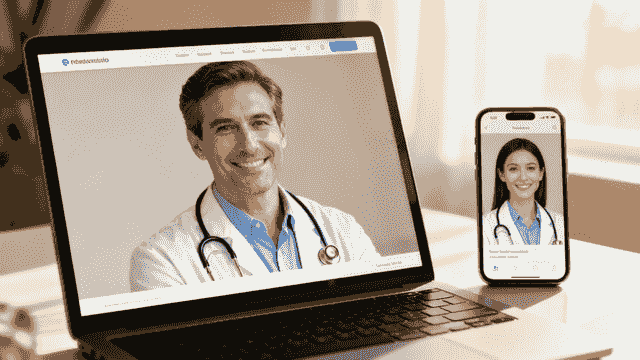
Building Instant Trust and Credibility
Trust is the absolute cornerstone of the doctor-patient relationship, and it starts long before anyone steps into your office. A warm, competent, and professional headshot makes you seem more approachable, humanizing you and helping to reduce a patient's natural anxiety. It's a form of non-verbal communication that conveys both confidence and compassion in a single glance.
A great doctor headshot really does a few key things:
- Reinforces Professionalism: It shows you take your image seriously, which patients often connect to the quality of care you deliver.
- Creates a Personal Connection: A friendly, open expression helps a potential patient feel like they know you, making them more likely to choose you.
- Establishes Authority: The right clothes, background, and posture subtly communicate your expertise and standing in your specialty.
Your headshot isn’t just for patients. It’s for colleagues, conference organizers, and hospital administrators. It’s the face of your personal brand, representing you in speaking engagements, publications, and professional networks.
Setting the Standard Across Digital Platforms
Consistency is everything when building a strong professional brand. Using the same polished headshot everywhere—from the hospital directory to LinkedIn to your practice’s "About Us" page—creates a unified and recognizable identity. It builds familiarity and reinforces a patient's decision to seek you out.
Your specialty matters here, too. A surgeon's headshot might aim to convey precision and confidence, while a pediatrician’s should probably prioritize warmth and approachability. The goal is to match your visual brand with what patients expect from your field.
This transforms your headshot from a simple photo into a critical tool for patient acquisition and professional networking. It’s a small investment with an outsized return — patients who see a physician’s professional photo before a visit report 30% higher trust — shaping perceptions before you ever say a word.
How do you plan a doctor headshot that looks authentic?
A great doctor headshot doesn't happen by accident—it’s the product of careful planning. Whether you're hiring a professional photographer or getting your images ready for an AI generator, the choices you make beforehand are what give the final photo its authority and personal touch.
This is where you decide the story your headshot will tell. Are you a warm, compassionate pediatrician? A sharp, innovative surgeon? Or the reliable family physician the community trusts? Every detail, from your shirt to the stethoscope you might carry, helps build that narrative.
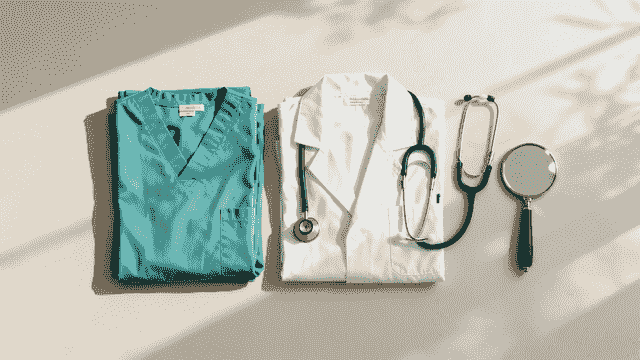
Defining Your Professional Wardrobe
Your clothing is the single most powerful visual cue in your headshot. It instantly tells a story about your specialty, your work environment, and how approachable you are. The classic white lab coat is a strong symbol, but it's far from your only option.
Think about the message you want to project:
- The White Lab Coat: This is the go-to for a reason. It immediately signals medical authority and deep expertise. It’s perfect for hospital directories and formal profiles where establishing credibility matters most. Just make sure it's crisp, clean, and fits well.
- Professional Business Attire: A blazer, suit, or professional blouse projects leadership. This is an excellent choice for physicians in administrative roles, private practice owners, or anyone who does a lot of public speaking.
- Scrubs: For surgeons, ER doctors, or anyone in a hands-on hospital specialty, scrubs can feel far more authentic and relatable. They show you’re active in a clinical setting.
- Business Casual: A simple button-down shirt or blouse creates a more modern, approachable vibe. It's a great look for primary care doctors, pediatricians, or psychiatrists who want to build a warm and trusting rapport right from the first glance.
The real key here is alignment. Your wardrobe should feel true to your day-to-day practice and connect with the patients you want to attract. A mismatch, even a subtle one, can create an immediate sense of disconnect.
To make the choice easier, here’s a quick-reference guide to help you match your attire and props to your professional persona.
Doctor Headshot Wardrobe and Prop Guide
| Element | What It Conveys | Best For | Considerations |
|---|---|---|---|
| White Lab Coat | Authority, Expertise, Tradition | Hospital directories, Formal profiles, Specialists | Ensure it is clean, pressed, and fits perfectly. Avoid a worn-out look. |
| Business Attire | Leadership, Administration, Professionalism | Practice owners, Department heads, Medical consultants | Choose classic, solid colors. Avoid busy patterns that can be distracting. |
| Scrubs | Hands-on, Clinical, Relatable | Surgeons, Emergency physicians, Anesthesiologists | Select a clean, well-fitting pair. Teal, blue, or gray are standard choices. |
| Business Casual | Approachable, Modern, Trustworthy | Primary care, Pediatrics, Psychiatry, General practice | A button-down shirt or blouse works well. Keep it simple and professional. |
| Stethoscope | Clinical Skill, Patient Care | Most clinical roles | Drape it naturally around the neck. Avoid stiff, posed placements. |
This table should help you narrow down the elements that best reflect your professional identity and the impression you want to make.
Using Props with Purpose
Props in a doctor's headshot need to be handled with care. The goal is to add a subtle layer of context, not to create a cluttered, staged photo. Honestly, a poorly chosen prop is worse than no prop at all.
The most effective and common prop is the stethoscope. When draped naturally around your neck, it reinforces your clinical role without being over the top. The key is to avoid holding it like you’re about to start an exam—its mere presence is enough to do the job. Other subtle props, like a pen or a tablet, can hint at an involvement in research or a modern, tech-savvy practice.
Grooming for a Polished Presentation
The final piece of the puzzle is grooming. This isn't about achieving perfection; it's about looking polished and making sure minor distractions don't pull focus from you. The goal is a clean, professional appearance.
Pay attention to a few key details:
- Hair: Make sure your hair is styled neatly and isn't falling in your face. It's best not to try a brand-new haircut right before your session; stick with a look you know and feel confident in.
- Skincare: A natural look is always best. A light touch of powder makes a huge difference for everyone, as it helps reduce shine from the lights.
- Hands and Nails: If your hands are going to be in the shot, make sure your nails are clean and neatly trimmed.
Ultimately, the best headshots blend professional standards with genuine personality. By planning these elements ahead of time, you're taking control of your professional image. While traditional photoshoots are one route, they can be expensive and time-consuming. Modern solutions offer incredible flexibility. Exploring different AI headshot pricing packages can be a cost-effective way to generate dozens of high-quality options, letting you pick the perfect look for every single platform.
What's the best pose and expression for a doctor headshot?
A great doctor headshot does more than just show what you look like—it communicates confidence and compassion in a single glance. Your pose and expression are the non-verbal cues that tell patients you're not just an expert, but an approachable caregiver. This isn't about learning complex modeling tricks; it's about small, deliberate adjustments that let your authentic professional self come through.
The right posture instantly signals confidence. A simple trick is to imagine a string gently pulling the crown of your head upward. This naturally straightens your spine and opens your chest, helping you avoid slouching, which can come across as disinterest or low energy.
Projecting Confidence Through Posture
Your body language speaks volumes before you ever say a word. A few small tweaks to how you hold yourself can completely change the tone of your doctor headshots. The idea is to look relaxed but in command.
One of the most effective moves is the classic "shoulders back and down." Gently roll your shoulders up toward your ears, then pull them back and let them drop. This creates a strong, open posture that looks both authoritative and comfortable.
Another powerful technique is to turn your body slightly away from the camera. Standing at a subtle 45-degree angle and then turning your head back to face the lens adds dimension and makes the shot more dynamic than a flat, passport-style photo.
A common mistake is looking too stiff. Your posture should feel strong but natural. Think "confident stance," not "military attention." That small difference is what makes you look approachable.
Finding the Right Expression
Your facial expression is probably the most important part of your headshot. It's what builds that initial trust with a potential patient. You want to land somewhere between a stern, academic look and a forced, unnatural grin.
The secret is to think about the feeling you want to convey. Are you aiming for calm reassurance? Energetic enthusiasm? Focused expertise? Your expression should match the professional brand you've built for yourself and your practice.
For most physicians, a slight, confident smile is the way to go. Try this quick exercise:
- Relax Your Face: Close your eyes and take a deep breath. Let go of any tension in your jaw or forehead.
- Think of Something Pleasant: It could be a successful patient outcome, a favorite vacation, or a happy memory. This brings a genuine warmth to your eyes.
- Smile Gently: Aim for a closed-lip or slightly open-mouthed smile that feels natural, not forced. A real smile always reaches the eyes, creating what photographers call the "squinch."
Small Details That Make a Big Impact
Beyond the big picture of posture and smiles, a few minor details can take your doctor headshots from good to great. These are the final touches that add an extra layer of professionalism.
- Head Tilt: A slight tilt of the head can make you look more engaged and thoughtful. Tilting it slightly toward the camera often conveys warmth and openness, which is perfect for most medical professionals.
- Hand Placement: If your hands are visible, keep them relaxed. Crossing your arms can sometimes read as defensive, although a gentle fold can also project authority if done right. A better bet is to lightly clasp your hands in front of you or simply place one hand in a pocket.
- Leaning In: Leaning subtly toward the camera is a classic technique for creating a sense of connection. It's a non-verbal way of saying, "I'm here for you," which can be incredibly reassuring for patients seeing your profile for the first time.
Ultimately, the best pose is one where you feel comfortable. Practice in front of a mirror to see what feels most like you. When you're at ease, it will translate into a headshot that is authentic, professional, and truly connects with patients.
How are AI tools making doctor headshots easier?
Let’s be honest, for any busy doctor, the traditional photoshoot is a logistical nightmare. Finding time to schedule it, driving to a studio, sitting through the session, and then waiting days for the proofs—it’s a massive time sink. But now, there’s a much smarter way to get studio-quality results without clearing your calendar. AI headshot generators are the perfect fit for physicians who need top-tier images on a tight schedule.
The entire process is incredibly simple. Instead of booking a photographer, you just take a handful of casual photos of yourself with your smartphone. These selfies become the raw material for the AI, which then creates a whole gallery of professional, photorealistic doctor headshots.
The Modern AI Headshot Workflow
Getting started is as easy as uploading your photos to a platform and picking the styles that match your professional brand. The AI handles everything else, generating dozens of options that look like they were shot in a high-end studio.
This new approach gives you total control. You can tweak all the important details to make sure your final images are perfect for any use, whether it’s for the hospital directory or your LinkedIn profile.
- Pick Your Setting: Choose from a clean studio gray, a modern office interior, or even a subtle outdoor look.
- Define Your Wardrobe: Generate images of yourself in a crisp lab coat, sharp business attire, or scrubs—all from the same set of photos.
- Refine Your Expression: The AI can create variations with different smiles, letting you choose the one that best projects warmth and confidence.
The end result is a full portfolio of high-quality, versatile images you can use immediately. You can learn more about what AI headshots can do and see how they can become part of your professional toolkit.
This simple flow chart breaks down the three key elements of a great source photo.
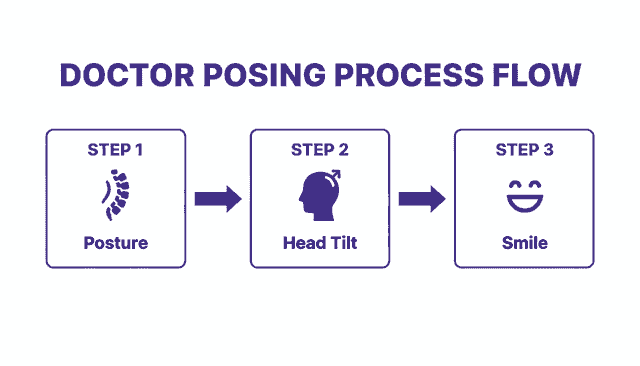
As you can see, strong posture, a confident head tilt, and a natural smile are the foundation. Give the AI good source material, and it will build from there.
Speed and Affordability Redefined
The most obvious wins with AI headshots are the massive savings in both time and money. The old way of doing things meant a hefty price tag for just a few edited photos.
By 2025, a traditional studio session costs around USD 283 on average, and that often gets you only one to three final images. AI, on the other hand, can deliver 50–150+ style variants in under an hour for a fraction of that cost.
This is about more than just saving a few dollars; it's about reclaiming your time. For a busy physician, getting dozens of professional headshot options back in less time than it takes to eat lunch is a massive win.
This efficiency is a huge asset for large medical groups or hospital systems that need to keep their staff branding consistent and professional. AI makes it possible to generate high-quality headshots at scale without the headache of coordinating hundreds of individual photoshoots.
Customization and Control
Beyond the speed, AI gives you a level of creative control that was never possible before. With the ability to generate images in different styles, you can have the perfect headshot for every single need.
Think about this real-world scenario:
- For the Hospital Directory: A classic headshot with a solid gray background, wearing a white lab coat, projects authority.
- For your LinkedIn Profile: A more modern, business casual look in a soft-focus office setting feels more approachable.
- For a Conference Speaker Bio: A shot with a bit more energy in the expression might be the perfect fit.
With a photographer, getting this kind of variety would mean multiple wardrobe changes and background setups, adding significant time and cost. With AI, you can create all these options from one set of source photos.
AI has truly shifted how medical professionals can manage their digital first impression. It empowers you to take full control with a process that is faster, more affordable, and infinitely more versatile than the old way of doing things.
Where should you use your new doctor headshot?
Getting a brilliant new headshot is a great first step, but it only works when you actually put it to use. An amazing image sitting in a folder doesn't do anything to build trust or attract new patients. The goal now is to strategically get your new doctor headshots out there across your entire digital footprint for maximum impact.
This is where you swap out all the old, inconsistent, or unprofessional photos for your new, polished image. Consistency is everything. When a patient sees the same confident and approachable face on your hospital bio, LinkedIn profile, and practice website, it builds instant familiarity and reinforces their decision to trust you with their care. A cohesive visual identity screams professionalism and attention to detail.
Optimizing Your Primary Digital Profiles
Your first priority should be the platforms where patients and colleagues are most likely to find you. Think of these as the digital front doors to your professional identity. Each one has its own quirks and technical specs, and getting them right ensures your headshot looks as good online as it does on your screen.
Start with these key platforms:
- Hospital and Clinic Directories: This is often the first place a referred patient will look you up. Make sure your new headshot meets the hospital's specific size and resolution requirements to avoid a blurry or badly cropped image.
- Professional Practice Website: On your own "About Us" or "Meet the Team" page, your headshot should be the highest possible quality. You have total control here, so use it to make the best impression possible.
- LinkedIn and Doximity: For networking, a sharp headshot is essential. These platforms are where you connect with peers, recruiters, and industry leaders. It’s a known fact that profiles with professional photos get far more engagement.
A consistent, high-quality headshot across all platforms does more than just make you look good—it builds an immediate, subconscious layer of trust. When your digital presence is unified, it tells patients and colleagues that you are organized, professional, and reliable.
The demand for professional headshots is only growing, driven by a digital-first approach to hiring and personal branding. LinkedIn and corporate career sites consistently report that profiles with professional headshots get up to 14x more views and 40% more connection requests (LinkedIn data). This is especially true in healthcare, where marketing and HR teams often require standardized imagery for executive bios and employee directories.
Technical Specifications and Best Practices
Uploading your new image isn't just a simple click-and-drag. To keep that crisp, professional quality of your doctor headshots, you need to pay attention to the technical details each platform requires. A beautiful high-resolution image can easily look pixelated if you upload it incorrectly.
Here are a few technical tips to keep in mind:
- File Type: Stick with a high-quality JPG or PNG file. For photos, JPG is usually the best bet, as it balances quality and file size really well.
- Resolution: Always start with the highest resolution file you have. It's much better to scale an image down than to try to scale a small one up, which is what causes that dreaded pixelation. Aim for at least 1000x1000 pixels.
- Aspect Ratio: Most profile picture slots are square (1:1 aspect ratio). It's a good idea to crop your headshot to a square before uploading to make sure your face is perfectly centered and nothing important gets cut off.
- File Naming: For your own website, name the file descriptively for a little SEO boost. Instead of
IMG_9876.jpg, use something likeDr-Jane-Smith-Cardiologist-Headshot.jpg.
Maintaining a Cohesive Brand for Your Team
If you're a practice manager or hospital administrator, ensuring every physician has a professional and consistent headshot is key to building a strong, unified brand. Inconsistent photos—some in lab coats, some in casual wear, all with different lighting and backgrounds—can make an organization look disjointed and unprofessional.
Implementing a standardized process can elevate the entire team's online presence. Providing clear guidelines on wardrobe and background choices helps create a cohesive look across the board. For large teams, coordinating individual photoshoots can be a logistical nightmare, which is where modern solutions can make a huge difference. You can explore how getting headshots for teams can streamline this process, ensuring every doctor has a high-quality, on-brand image without the typical hassle and high cost. This approach ensures your team presents a united, professional front to every patient who finds you online.
What Our Data Shows About Healthcare Professional Headshots
Healthcare is one of BetterPic's largest verticals, driven by hospital systems and medical groups standardizing their provider directories. Here is what we have observed:
- Medical headshot orders peak in July and January, aligning with new residency classes and fiscal year resets at hospital systems.
- Healthcare organizations are our largest team order segment. The average medical group team order is 47 employees, compared to 23 for corporate and 12 for real estate.
- White coat vs. no white coat is a 50/50 split. Exactly half of physician headshot orders include a white coat, while the other half opt for business professional attire. Specialists (surgeons, cardiologists) lean toward white coats at 63%.
- Provider directory compliance drives urgency. 38% of healthcare headshot orders are marked as urgent (under 2-hour delivery), the highest urgency rate of any industry, typically tied to credentialing deadlines or new provider onboarding.
- Multi-location health systems see 3x faster adoption of AI headshots compared to single-location practices, driven by the logistical challenge of coordinating photographers across facilities.
Frequently asked questions about doctor headshots
As you get ready to create or update your professional headshot, a few questions always seem to pop up. Whether it's about timing, avoiding common pitfalls, or figuring out new technology, getting clear answers helps you make the right call for your doctor headshots. Let's walk through the most common queries we hear from medical professionals.
Getting these details right is about more than just a nice photo—it ensures your headshot works as hard as you do, building trust before you even meet a patient.
How Often Should I Update My Doctor Headshot?
The general advice is to refresh your headshot every 3-5 years, but that’s not a hard-and-fast rule. A much better guideline is to get a new photo any time your appearance changes significantly. Think a new hairstyle, different hair color, noticeable weight change, or if you start wearing glasses.
Your headshot's main job is instant recognition. When a new patient finds you online, you want them to see a familiar face when they walk into your office. That small moment of connection is a surprisingly important step in building rapport from the get-go.
An outdated photo can create a weird disconnect, subtly suggesting your professional brand isn't being actively managed. Keeping it current is a simple way to signal that you’re on top of your game.
What Are the Biggest Mistakes to Avoid?
Even with the best intentions, a few common slip-ups can seriously undermine the professionalism of your doctor headshots. Knowing what they are is half the battle.
Here are the most frequent mistakes we see:
- Bad Lighting: Harsh overhead lights create unflattering shadows, especially under the eyes and nose. On the flip side, dim lighting just looks grainy and unprofessional.
- Busy Backgrounds: A cluttered office, a busy hallway, or some distracting wallpaper behind you pulls the focus away from where it should be—on you.
- Forced Expressions: That cheesy, forced grin or an overly stern, serious look can make you seem unapproachable. You're aiming for a confident, relaxed smile that looks and feels genuine.
- Low-Resolution Images: Never, ever use a cropped photo from a family vacation or a low-quality selfie. These images will look pixelated and blurry on professional websites and directories, and it's a dead giveaway.
A professional headshot is a carefully controlled image. Steer clear of these common errors, and you’ll make a first impression that communicates competence, attention to detail, and approachability.
Are AI Headshots Professional Enough for Medical Use?
Absolutely. Today's AI headshot generators are a world away from the quirky apps of the past. They now produce photorealistic, high-resolution images that are virtually indistinguishable from pictures taken in a traditional studio. For medical professionals, this technology is a serious upgrade — offering a mix of quality, convenience, and control that traditional photography can't match.
The real advantage is the ability to generate images that perfectly match the high standards of the medical field. You can specify everything from a crisp white lab coat to professional business wear and select a clean, neutral background. This ensures the final headshot isn't just professional but also aligns with your hospital's or clinic's branding.
For large healthcare systems, clinics, or entire hospitals, AI offers a uniquely scalable solution. It’s a cost-effective and remarkably efficient way to give every single physician a consistent, high-quality headshot without the logistical nightmare of coordinating hundreds of individual photoshoots. It puts you in the driver's seat, empowering you to maintain a polished and unified brand image everywhere.
Ready to create a portfolio of professional, high-quality images without the time and expense of a traditional photoshoot? BetterPic uses advanced AI to generate over 150 photorealistic headshot styles in under an hour, giving you complete control over your professional image. Get your studio-quality doctor headshots today at BetterPic.
Sources & References
- LinkedIn Profile Photo Tips — LinkedIn
- How Your Profile Photo Impacts Your LinkedIn Presence — LinkedIn Official Blog
- AI Image Generation Market Report — Grand View Research
- How AI Is Changing Photography — Forbes
- Professional Headshot Photography Pricing — Thumbtack

Written by
Apoorv SharmaHead of Performance
Apoorv leads performance and growth at BetterPic with 9+ years of experience across SEO, SEM, and growth marketing. He oversees content strategy, data-driven marketing, and hands-on testing of AI headshot platforms. Previously held senior performance marketing roles across the US, Belgium, and India.
- Google Analytics & Google Ads certified
- HubSpot Inbound & Content Marketing certified
- 9+ years in SaaS growth and performance marketing
Related healthcare headshots resources
Keep exploring this topic with focused resources from the B2C journey.
Primary destination:Healthcare professional headshots
Frequently Asked Questions
Why do doctor headshots matter for patient trust?
- Patients almost always research physicians online before booking, making your headshot a strategic trust-building asset. A warm, professional photo makes you appear more approachable and helps reduce patient anxiety. It reinforces professionalism, creates personal connection, and establishes authority in your specialty.
What should a doctor wear for a headshot?
- The white lab coat signals medical authority and works best for hospital directories. Business attire projects leadership for administrators and practice owners. Scrubs feel authentic for surgeons and ER doctors. Business casual creates an approachable vibe for primary care, pediatrics, and psychiatry.
How much do AI doctor headshots cost compared to traditional photography?
- Traditional studio sessions average $283 per physician and produce just 1-3 final images. AI generators deliver 50-150+ style variants in under an hour for a fraction of that cost. For large health systems, AI saves massively on scheduling coordination and physician downtime.
How often should doctors update their headshots?
- Refresh your headshot every 3-5 years, or sooner if your appearance changes significantly through a new hairstyle, glasses, or weight change. An outdated photo creates a disconnect when patients meet you in person and subtly suggests your professional brand is not actively managed.
Can AI headshots show doctors in lab coats and scrubs?
- Yes. AI headshot generators let you choose specific wardrobe options including lab coats, business attire, scrubs, and business casual. You can also select backgrounds like clean studio gray, modern office interiors, or subtle outdoor looks, all generated from the same set of source photos.
Are AI headshots professional enough for hospital websites?
- Yes. Modern AI generators produce photorealistic, high-resolution images virtually indistinguishable from traditional studio photos. They offer a uniquely scalable solution for hospitals that need consistent branding across hundreds of physicians without the logistical nightmare of coordinating individual photoshoots.
Save 87%on average on your professional photos.
Whenever, wherever you are.
Get studio-quality, 4K images in a variety of outfits & settings in less than an hour.
Get your headshots nowStart now