
What To Wear For Professional Headshots (Men & Women Guide)
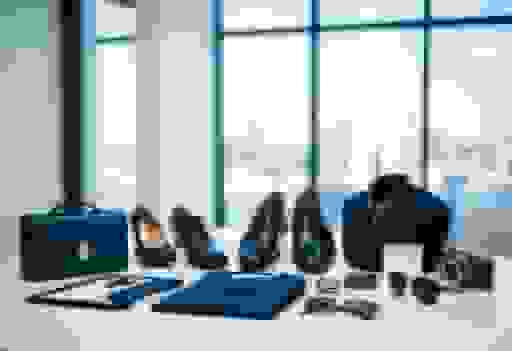
This article is part of our Professional Headshots collection.
Written by Apoorv Sharma · Edited by Widi Ginanjar
Your professional headshot is not just a nice photo. It is a split-second branding asset that shapes how people read everything else about you.
Research in psychological science shows that people form impressions of traits like competence and trustworthiness from a face in about 100 milliseconds — one tenth of a second. Longer viewing mostly makes them more confident in the first impression, not different in their judgment. (Source: Willis & Todorov – Psychological Science (PubMed))
On LinkedIn, profiles with professional photos get dramatically more attention. Analyses referencing LinkedIn’s internal data report up to 21× more views and 36× more messages compared to profiles without a photo. (Source: O’Reilly – The Ultimate LinkedIn Sales Guide)
What you wear in a headshot is not about fashion. It is about positioning, perception psychology, and the story you communicate before anyone reads your headline.
This guide treats attire as a strategic branding decision and shows how to use color, fit, structure, and AI headshots to control the impression you make.
Why Your Headshot Outfit Is A Branding Decision

Think of your headshot as your digital handshake. In most professional contexts, people see your photo in:
- Search results
- Email avatars
- Team pages
- Speaking bios
- Investor decks
Long before they speak with you.
What People Actually Judge From A Photo
From a single face photo, people rapidly infer whether someone seems:
- Competent
- Trustworthy
- Warm
- Dominant
(Source: Willis & Todorov – Psychological Science)
These first impressions feel automatic and are difficult to reverse later. Clothing and styling directly influence those snap judgments:
- Confidence — Structured jackets and intentional color choices suggest direction.
- Competence — Dressing within industry norms signals awareness of context.
- Trust — Calm, cohesive colors reduce cognitive noise and keep focus on your face.
Your outfit functions as a uniform for your personal brand. The goal is not to look fashionable. The goal is to look aligned.
How To Choose Your Headshot Outfit Step By Step
This section follows a clean decision framework so it can map to structured How-To schema.
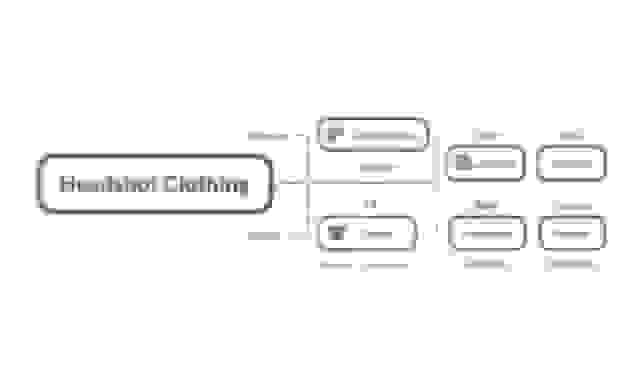
Step 1 — Decide Where The Headshot Has To Perform
List where this headshot will appear over the next 12–24 months:
- LinkedIn profile
- Company bio page
- Press or podcast features
- Sales decks or proposals
- Personal website
- Resume (if culturally appropriate)
In the United States, many career experts advise against including a photo on a resume due to bias and screening risks. However, a strong LinkedIn headshot is widely recommended. (See: Photo On CV Guide – BetterPic)
Clarifying use cases determines how formal and how evergreen your attire should be.
Step 2 — Choose The Right Formality For Your Industry
A simple rule:
Dress one level more polished than your daily workwear — within your industry’s norms.
- Finance / Law / Corporate: Classic business formal
- Tech / Startups: Structured smart casual
- Creative / Media: Polished with controlled personality
Make this decision first. Every other styling choice should align with this level.
Step 3 — Pick Colors That Support Your Brand Story
Color is processed almost instantly by the human brain.
Blues and deep cool tones are widely associated with trust and stability, which is why financial institutions, tech firms, and healthcare brands use them heavily. (Source: Stackari – Color Psychology For Business)
To apply color strategically:
- Choose mid-tone solid colors near your face
- Limit to one dominant color + one neutral
- Avoid neon or high-saturation tones
- Avoid overly bright colors that clip on digital screens
The safest palette for most professionals:
- Navy
- Charcoal
- Deep green
- Burgundy
- Soft earth tones
These colors frame your face without competing with it.
If you are unsure how different colors read on camera, AI headshots allow you to test structured, smart-casual, and formal looks side-by-side before publishing your final profile image. Explore: BetterPic
Step 4 — Get Fit And Neckline Right
Fit is one of the strongest non-verbal competence signals.
An affordable blazer that fits perfectly will always look more credible than an expensive one that collapses at the shoulders.
Jackets and Blazers
- Shoulder seam should sit exactly at the edge of your shoulder
- Sleeves should end around the wrist bone
- When buttoned, the front should lie flat without pulling
Wrinkles, bunching, and tension lines are amplified on camera.
Shirts, Tops, and Dresses
- Avoid fabric that strains at buttons or seams
- Avoid very low necklines that fall awkwardly in tight crops
- Choose clean shapes that frame the jaw and neck
Strong neckline choices:
- Collared shirts (classic authority)
- V-necks (elongate the neck and slim the face)
- Crew necks (modern, minimal look)
Headshots are typically cropped chest-up. Your neckline should feel balanced within that frame.
Step 5 — Layer For Structure And Presence
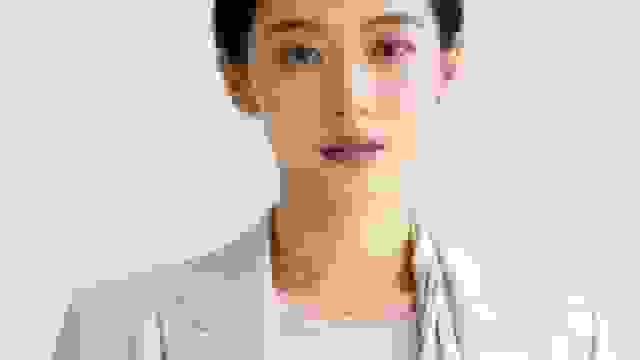
Layering increases perceived authority and visual depth.
- Structured blazer → Instant seniority signal
- Fine-gauge sweater under jacket → Adds warmth without bulk
- Smart cardigan → Softer alternative for coaching or HR roles
For corporate environments, anchor everything with a blazer.
For tech and modern roles, a blazer over a premium T-shirt or knit communicates competence without stiffness.
Step 6 — Control Patterns, Textures, And Digital Distortion
Fine patterns can create a visual artifact called moiré — a wavy, shimmering distortion caused when tight patterns interact with a camera sensor grid. (Source: Wikipedia – Moiré Pattern)
To reduce risk:
- Avoid tight pinstripes
- Avoid tiny checks or herringbone
- Avoid high-contrast micro-patterns
- Favor solid fabrics or low-contrast large textures
- Choose matte fabrics over shiny ones
Photographers are trained to spot moiré because it is difficult to fix after capture. (Source: Light And Matter – Moiré And Photography)
If a pattern shimmers when you zoom in on your phone, choose something simpler.
Step 7 — Test On Camera Before You Commit
Before booking a shoot or generating AI headshots:
- Put on your chosen outfit
- Take chest-up test photos on your phone
- View them small (like a LinkedIn circle crop)
- Ask a trusted colleague:
“What does this outfit make you expect from me professionally?”
If your clothing draws more attention than your eyes, simplify. If you use BetterPic, you can generate multiple outfit variations and compare them side-by-side before publishing.
Color Psychology For Professional Headshots
Below is a strategic reference table.
Core Headshot Colors And What They Signal
| Color | Primary Association | Recommended Use |
|---|---|---|
| Navy / Deep Blue | Trust, stability, calm authority | Safest choice for corporate, finance, tech |
| Charcoal Gray | Sophistication, maturity | Executive, consulting, B2B |
| Black | Power, control (can feel distant) | Leadership, creative roles |
| White / Off-white | Clarity, cleanliness | Layer under jackets, not solo on white background |
| Deep Green / Teal | Innovation, growth | Tech, sustainability |
| Burgundy / Deep Wine | Depth, seriousness | Law, academia, senior IC roles |
| Camel / Brown | Reliability, grounded presence | Operations, people leadership |
Deep blues are especially associated with trust in professional branding. (Source: Stackari – Color Psychology)
The safest formula:
Navy or charcoal jacket + light shirt + one subtle accent.
What To Wear For Headshots By Industry
Finance, Law, Traditional Corporate
Goal: Low-risk authority.
Men
- Navy or charcoal suit jacket
- White or pale blue shirt
- Solid tie (navy, burgundy, dark green)
Women
- Tailored blazer (navy, charcoal, black)
- Structured blouse (white, ivory, jewel tone)
- Sheath dress + blazer (optional)
Keep accessories minimal.
If you need multiple variations (LinkedIn, firm bio, press), you can generate consistent but distinct sets using AI-generated headshots.
Tech, Startups, Modern Corporate
Goal: Competent and current.
- Blazer over quality T-shirt or knit
- Open-neck Oxford shirt
- Neutral textured jacket
Fit and fabric quality matter more than strict formality.
Many founders generate two sets of images:
- A more formal set for LinkedIn
- A relaxed set for product or community platforms
You can explore a detailed framework in our LinkedIn headshot guide.
Consultants, Coaches, Solo Professionals
Goal: Trust + warmth.
- Mid-tone blazer (blue, gray, soft green)
- Soft knit or blouse
- Minimal jewelry
Avoid overly casual pieces unless your audience expects them.
Creative, Design, Media
Goal: Taste without distraction.
- Solid base + one controlled personality element
- Monochrome outfits with texture
Keep patterns large and subtle to avoid moiré.
Camera Psychology — How The Sensor Sees Your Outfit
Attire decisions are not just about human perception.
They are also about how digital cameras and screens interpret contrast, texture, and light.
Avoid Moiré And On-Screen Distortion
Moiré occurs when fine repeating patterns interact with a camera sensor or pixel grid, producing wavy distortions. (Source: Shotkit – Moiré Effect In Photography)
Common offenders:
- Tight stripes
- Herringbone
- Birdseye weaves
- High-contrast micro-checks
These patterns may look fine in person but can shimmer or vibrate digitally.
When in doubt: Take a test photo and zoom in. If it shimmers, switch fabrics.
Manage Contrast And Exposure
Digital platforms compress images heavily.
Extreme contrast between clothing and background can cause:
- Clipping
- Loss of detail
- Harsh edges
Avoid:
- Pure white shirt on pure white background
- Pure black top on dark background
Instead: Choose mid-tone clothing over a slightly lighter or darker background to maintain separation and detail. For example, BetterPic’s 4K headshots preserve texture even after LinkedIn compression and circular cropping — especially when following proper headshot sizing guidelines.
Frame For Platform Cropping
Most platforms display your photo as:
- A small circle
- A rounded square
- A compressed thumbnail
To optimize framing:
- Keep eyes in the upper third
- Leave space above hairline
- Avoid deep necklines that disappear in tight crops
Your clothing should frame your face quietly — not compete with it.
Using AI To Test And Rotate Headshot Outfits
Traditional photography locks you into one outfit per session. AI headshots remove that constraint. With BetterPic, you can:
- Generate multiple structured and smart-casual variations from one upload
- Compare blazer vs knit instantly
- Adjust colors for brand alignment
- Create different sets for different platforms
You can explore the full workflow in this AI headshots guide.
For teams, companies can standardize attire and backgrounds across the organization while maintaining individuality through structured company headshot solutions. This flexibility turns attire into a strategic choice — not a one-day guess.
FAQ
How Should I Dress For Corporate Headshots If I Want To Look More Confident?
Confidence on camera comes from:
- Structured shoulders
- Clean neckline
- Mid-tone solid colors
- Minimal accessories
Research shows that people form dominance and competence impressions rapidly from facial presentation and styling cues. (Source: Psychological Science – First Impressions). A well-fitted blazer in navy or charcoal is almost always the safest authority signal.
What Clothing Patterns Cause Digital Distortion In Headshots?
Most likely to cause issues:
- Tight pinstripes
- Tiny high-contrast checks
- Fine herringbone
These can produce moiré artifacts. (Source: Light And Matter – Moiré)
Choose solids or large, subtle textures instead.
What Are The Best Shirt Colors For LinkedIn Headshots In Tech?
For tech professionals:
- Navy or charcoal jacket
- White, pale blue, or soft gray shirt
- Optional deep green or teal accent
Deep blues are strongly associated with trust in business branding. (Source: Stackari – Color Psychology)
Avoid overly bright colors that overpower your face in small LinkedIn thumbnails.
Can An AI Headshot Generator Provide Professional Suit Options?
Yes.
BetterPic generates 4K professional headshots with a range of suit, blazer, and smart-casual variations in under an hour.
After generation, you can refine clothing styles, adjust colors, and request human touch-ups if needed. See the full workflow in this AI headshots guide.
Should I Match My Company’s Brand Colors?
Use brand colors strategically — not literally.
Smart use:
- Navy blazer that echoes brand navy
- Subtle tie or top in muted brand color
Risky use: Bright brand color dominating the frame
Research in color psychology consistently shows that calm, deep tones are associated with trust and stability more than high-saturation hues. (Source: Stackari – Color Psychology)
Your headshot’s first job is credibility. Brand accents should support — not overpower — that signal.
Final Thought
Your professional headshot is not about looking attractive. It is about looking aligned. Aligned with:
- Your industry
- Your role
- Your audience
- Your ambition
When you decide on positioning first, then back it up with color, fit, and structure — and use AI to test variations without multiple shoots — attire stops being a last-minute outfit choice. It becomes part of your professional strategy. Explore customizable AI headshots here: https://www.betterpic.io/
Sources & References
- LinkedIn Profile Photo Tips — LinkedIn
- How Your Profile Photo Impacts Your LinkedIn Presence — LinkedIn Official Blog
- AI Image Generation Market Report — Grand View Research
- How AI Is Changing Photography — Forbes
- First Impressions from Faces — Psychological Science

Written by
Apoorv SharmaHead of Performance
Apoorv leads performance and growth at BetterPic with 9+ years of experience across SEO, SEM, and growth marketing. He oversees content strategy, data-driven marketing, and hands-on testing of AI headshot platforms. Previously held senior performance marketing roles across the US, Belgium, and India.
- Google Analytics & Google Ads certified
- HubSpot Inbound & Content Marketing certified
- 9+ years in SaaS growth and performance marketing
Related what to wear for headshots resources
Keep exploring this topic with focused resources from the B2C journey.
Primary destination:BetterPic homepage
Frequently Asked Questions
What colors photograph best for professional headshots?
- Navy, charcoal gray, deep green, burgundy, and soft earth tones work best. These mid-tone solid colors frame your face without competing with it. Avoid neon, high-saturation tones, pure white on white backgrounds, and pure black on dark backgrounds.
Should you wear patterns in a professional headshot?
- Avoid tight patterns like pinstripes, herringbone, and high-contrast micro-checks. These create moire artifacts, a wavy digital distortion caused when fine patterns interact with camera sensors. Stick to solid fabrics or large, subtle textures in matte finishes.
What should men wear for corporate headshots?
- For finance or law, wear a navy or charcoal suit jacket with a white or pale blue shirt and solid tie. For tech, a blazer over a quality T-shirt or open-neck Oxford works well. Ensure the jacket fits perfectly at the shoulders with sleeves ending at the wrist bone.
What should women wear for professional headshots?
- A tailored blazer in navy, charcoal, or black paired with a structured blouse in white, ivory, or a jewel tone is a safe choice. V-necks elongate the neck and slim the face. Avoid very low necklines that fall awkwardly in tight headshot crops.
Can AI headshot generators change your outfit?
- Yes. Platforms like BetterPic generate headshots with different suit, blazer, and smart-casual variations from a single upload. You can compare looks side-by-side and adjust colors for brand alignment without doing multiple photoshoots.
Should your headshot outfit match your company brand colors?
- Use brand colors strategically, not literally. A navy blazer echoing brand navy or a subtle tie in a muted brand color works well. Avoid bright brand colors dominating the frame, as calm deep tones are associated with trust and stability more than high-saturation hues.
Save 87%on average on your professional photos.
Whenever, wherever you are.
Get studio-quality, 4K images in a variety of outfits & settings in less than an hour.
Get your headshots nowStart now